

During harvest season, one of the biggest concerns for grain producers is how to dry their grain quickly and efficiently. So, what is a mechanical mobile grain dryer? Simply put, it’s a transportable machine designed to remove moisture from harvested crops, like corn, wheat, or rice, right in the field or at temporary locations—no need for a fixed drying site.
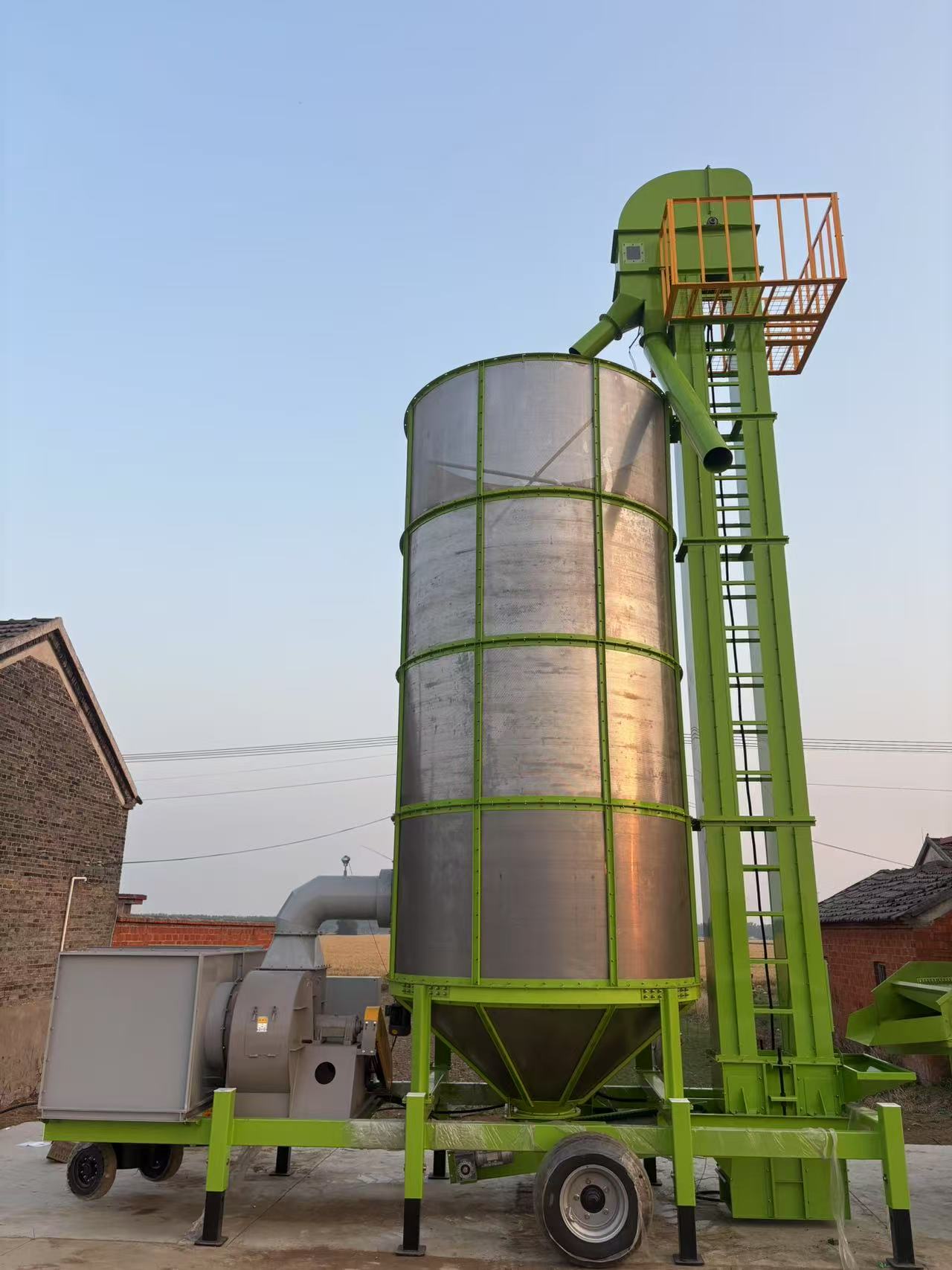
Unlike massive stationary dryers that require heavy investment and fixed infrastructure, these mobile dryers are made for flexibility and convenience. They’re especially useful for small to medium-sized farms or for those located in remote areas without drying facilities.
How Does a Mechanical Mobile Grain Dryer Work?
At its core, a mechanical mobile grain dryer uses hot air and mechanical movement to reduce moisture content in grains. Here’s how the basic process works:
- Grain is loaded into a rotating drum or drying chamber.
- A heat source (like diesel, biomass, or gas) generates hot air.
- The hot air circulates through the chamber, removing moisture as the grain tumbles.
- Fans help circulate the air and keep temperatures stable.
- Once the target moisture level is reached, the dry grain exits the machine and is ready for storage or sale.
The whole process can be managed by one or two people and typically takes a few hours, depending on the grain type and moisture content.
Key Components of a Mechanical Mobile Grain Dryer
While designs may vary from brand to brand, most mechanical mobile grain dryers share these core parts:
1. Drying Chamber or Drum
This is where the grain sits and gets dried. Many dryers use a rotating drum to keep the grain moving and prevent uneven drying.
2. Heat Source
Dryers use various fuel types—diesel, LPG, or biomass pellets—to produce the hot air needed for moisture removal.
3. Blowers and Fans
These push heated air through the grain, ensuring that all parts of the batch are evenly dried.
4. Control Panel
This allows the operator to adjust temperature, drying time, and airflow depending on the grain type and weather conditions.
5. Trailer and Wheels
Since it’s mobile, the entire unit is built onto a wheeled platform, often towable by a tractor or truck.
Real-Life Use Cases: Farmers Making It Work
Take for example, a corn farmer in Iowa with multiple fields spread across 30 miles. Instead of hauling wet grain to a central facility, they bring a mechanical mobile dryer right to the field edge. They start drying as soon as the corn is harvested, saving fuel, time, and manpower.
In Southeast Asia, many rice farmers rely on small mobile dryers during monsoon seasons. Fixed dryers are impractical due to unpredictable weather and poor roads. The mechanical mobile option allows them to process small batches right at the village edge, ensuring better quality and reducing post-harvest losses.
Benefits Over Fixed Drying Systems
Why do so many farmers prefer mechanical mobile grain dryers these days? Let’s look at the clear advantages:
- Portability: Move it wherever the harvest is happening.
- Cost-Effective: No need to build permanent structures or install large electrical systems.
- Time-Saving: Dry on the spot, no transport delays.
- Scalable: Works well for small farms or cooperatives who share equipment.
And while mobile dryers might not handle massive volumes like industrial drying towers, they make up for it in flexibility and speed.
What to Consider Before Buying
Before jumping into a purchase, it’s smart to look at a few practical factors:
- Capacity: How much grain do you typically dry per day?
- Fuel Type: Choose a dryer that uses fuel available in your area.
- Mobility: Can it be towed by your existing tractor or vehicle?
- Ease of Use: Are the controls simple, and is training available?
- After-Sales Support: Is there local technical support or spare parts available?
Also, don’t just go by the cheapest model. A reliable, well-built dryer may cost more upfront but can save a lot over the long run in reduced breakdowns and better drying performance.
Conclusion: Is a Mechanical Mobile Grain Dryer Right for You?
If you’re dealing with scattered farmland, unpredictable weather, or lack of infrastructure, a mechanical mobile grain dryer can be a game-changer. It gives you control over your harvest and helps maintain grain quality without being tied down to a single location.
In today’s farming world, flexibility, efficiency, and speed matter more than ever. And for many grain growers, going mobile is not just an option—it’s the smart move.
Zhongfeng Agricultural Science recommends that you use our company’s grain dryers, mobile grain dryers, and grain drying towers


 WeChat QR code


