

What Farmers Mean by Dryer and Column Dryer
When people in agriculture talk about a dryer, they usually mean equipment designed to remove moisture from harvested grain so it can be safely stored or sold. A column dryer is one specific type of grain dryer that uses vertical columns of grain and controlled airflow to achieve consistent drying.
In real farm conversations, column dryers are often mentioned as reliable, straightforward machines. They are not new or flashy, but they are widely used because they get the job done under real harvest conditions.
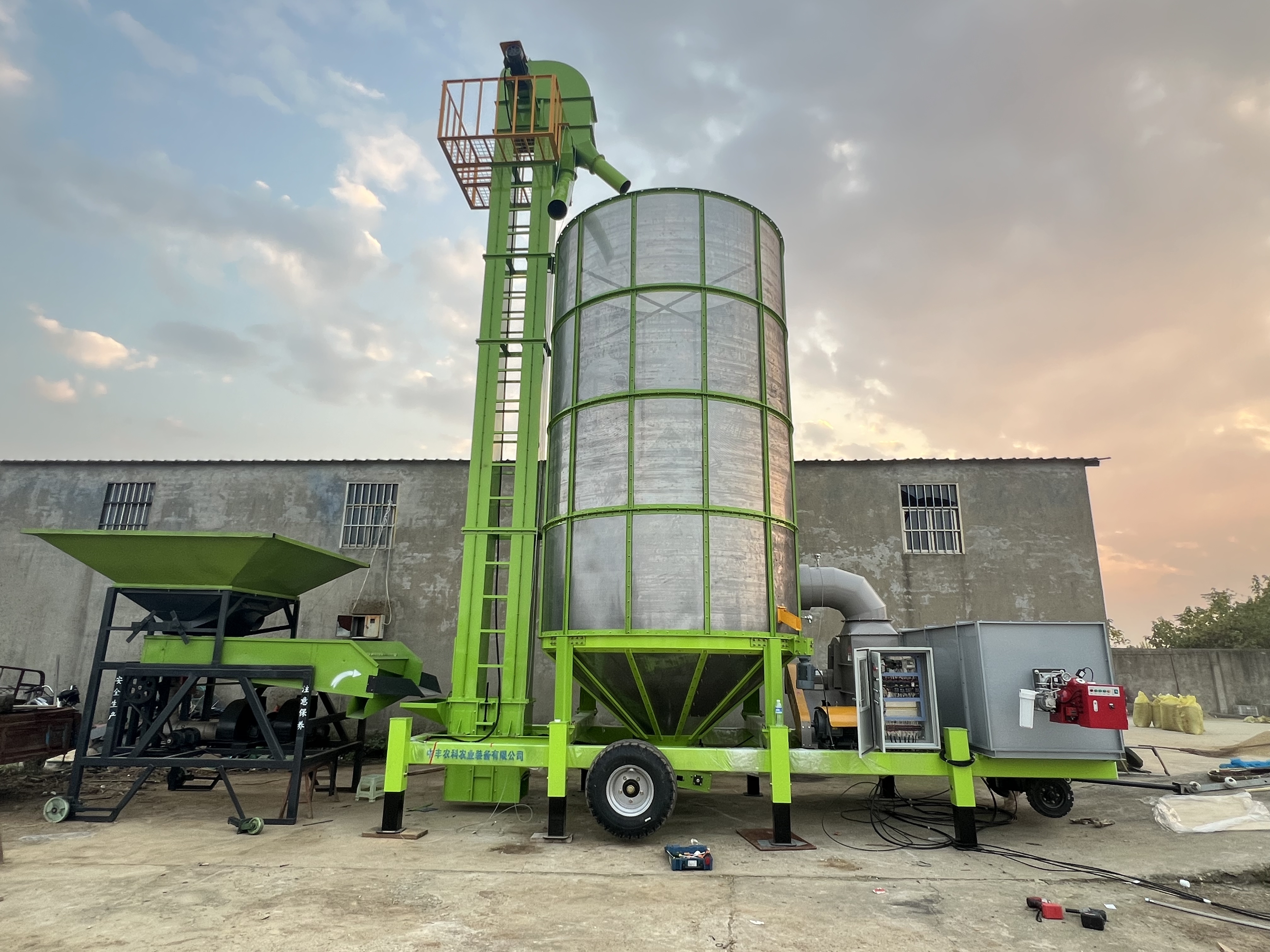
Why Column Dryers Are Common in Grain Drying
Column dryers have been around for many years, and there is a reason they are still popular. From a farmer’s point of view, they offer a good balance between capacity, simplicity, and cost.
Many farms deal with limited space and tight harvest windows. A column dryer uses vertical space efficiently and can handle continuous drying, which helps keep grain moving even when weather conditions are not ideal.
Basic Structure of a Column Dryer
A typical column dryer consists of one or more vertical grain columns, perforated walls, airflow fans, a heating system, and a discharge mechanism at the bottom. Grain flows downward through the columns by gravity.
Hot or warm air is pushed through the grain columns from one side to the other. As air passes through the grain, it removes moisture before exiting through exhaust ducts.
How a Column Dryer Works in Daily Operation
In daily use, grain is fed into the top of the column dryer using an elevator or auger. Once inside, the grain slowly moves downward at a controlled speed.
Operators adjust air temperature, airflow volume, and grain discharge speed to reach the target moisture level. Once the settings are correct, the column dryer can run continuously for long periods, which is especially useful during peak harvest.
Main Advantages of Using a Column Dryer
Stable and Continuous Drying
One major advantage of a column dryer is steady operation. Unlike batch dryers, there is no need to stop and restart the process repeatedly.
Even Air Distribution
The column design allows air to pass evenly through the grain layer. This helps reduce uneven drying and lowers the risk of overdried or underdried grain.
Simple and Proven Design
Many farmers appreciate that column dryers do not rely on complex mechanisms. Fewer moving parts usually mean fewer breakdowns during the busiest time of the year.
Crops Commonly Dried with Column Dryers
Column dryers are widely used for corn, wheat, rice, barley, and sorghum. Corn is one of the most common crops dried using this type of dryer because it is often harvested at higher moisture levels.
For food-grade grains like wheat and rice, column dryers can be adjusted to use lower temperatures, helping protect grain quality and reduce cracking.
Capacity, Layout, and Installation Considerations
Column dryers come in different sizes, from smaller farm-scale units to larger commercial systems. Choosing the right capacity depends on daily harvest volume and expected grain moisture.
Installation requires proper foundation support, adequate height clearance, and good integration with existing grain handling systems. Many farms place column dryers close to storage bins to reduce extra handling.
Energy Use, Fuel Options, and Operating Costs
Like any dryer, a column dryer requires energy to operate. Common fuel options include natural gas, propane, diesel, and sometimes biomass. Fans and control systems also consume electricity.
From real-world experience, operating cost depends more on how the dryer is managed than on the dryer type itself. Proper airflow and temperature settings can significantly reduce fuel use per ton of grain.
Grain Quality, Moisture Control, and Storage Results
Grain dried in a column dryer often has more uniform moisture, which is a big advantage when it comes to storage. Even moisture helps prevent hot spots, mold growth, and insect problems in bins.
Farmers often notice that grain dried evenly stores better and maintains quality longer, which provides more flexibility when deciding when to sell.
Maintenance, Operation, and Long-Term Reliability
Routine maintenance for a column dryer includes cleaning dust and debris, checking fans and burners, and inspecting grain discharge systems. These tasks are usually straightforward and can be done on a regular schedule.
With proper care, column dryers are known to last many years. Many farms continue using the same dryer for decades, making it a long-term investment rather than a short-term expense.
Common Problems and Real-World Solutions
One common issue is uneven drying caused by improper airflow or incorrect grain flow speed. This is usually solved by adjusting settings rather than making mechanical changes.
Another problem is neglecting regular inspections. Small issues like dust buildup or worn components can lead to downtime if not addressed early.
Is a Column Dryer the Right Dryer for Your Operation
Choosing the right dryer depends on farm size, crop type, and harvest conditions. A column dryer is often a good choice for farms that want reliable, continuous drying without overly complex systems.
From a practical point of view, column dryers offer steady performance, good grain quality, and manageable operating costs. When matched correctly to an operation, a column dryer becomes a dependable part of the harvest process, helping farmers protect grain value and reduce stress season after season.
Welcome to choose our company’s other types of grain dryers, 20-ton mobile grain dryers, 5-ton mobile grain dryers, 10-ton mobile grain dryers,25-ton mobile grain dryers


 WeChat QR code


