

Grain drying has become one of the biggest challenges for Nigerian farmers and millers. With unpredictable rainfall, high humidity in some regions, and the need to process grains quickly after harvest, relying on traditional sun drying methods is no longer enough. This is why many farmers and entrepreneurs are turning to the Nigeria grain dryer market to find practical solutions. But what does it really mean to use a grain dryer in Nigeria, and how do you choose the right one? This article will explore the real situation on the ground, what buyers should consider, and how to use grain dryers effectively.
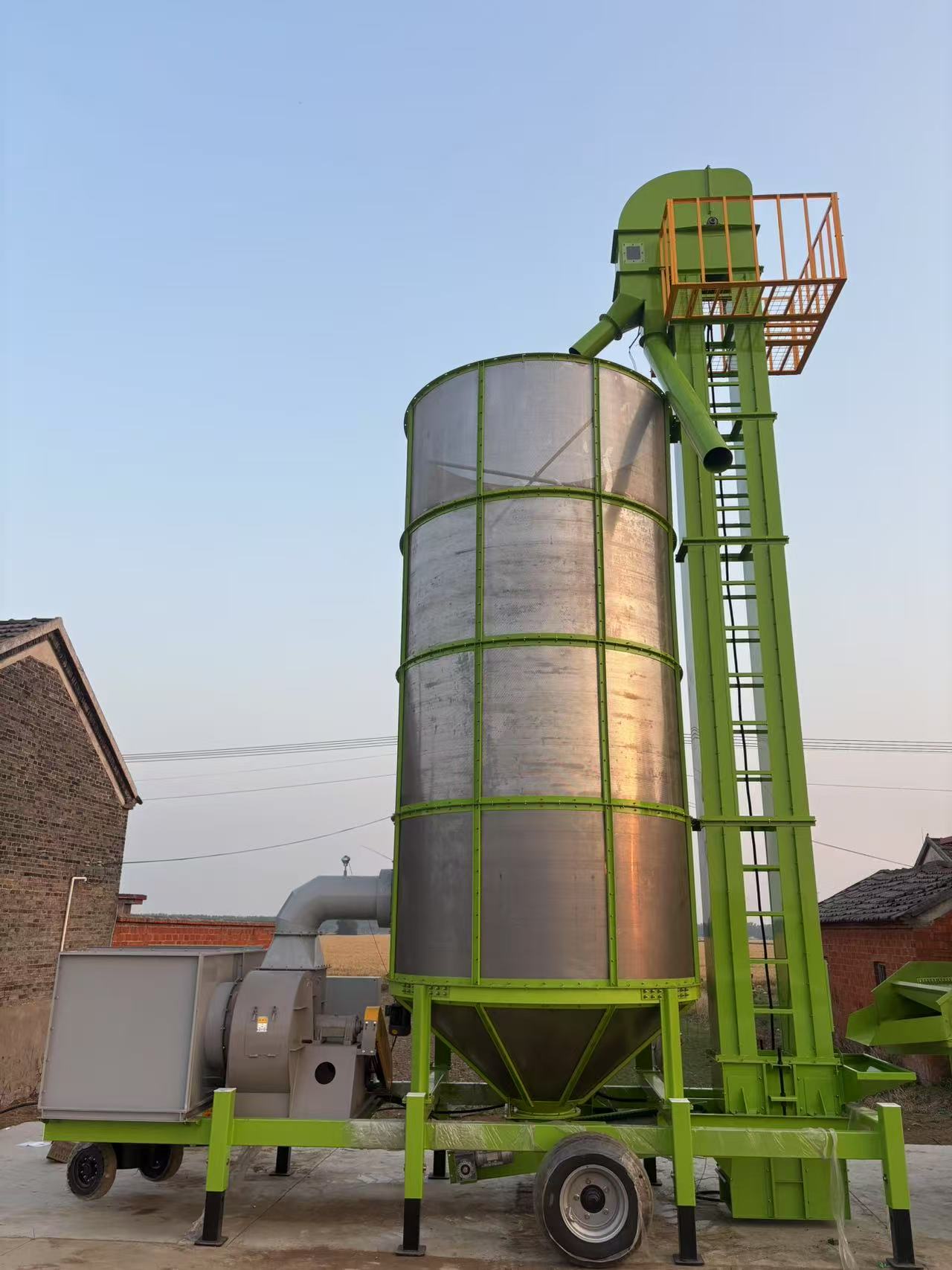
Why Grain Dryers Matter in Nigeria
In many parts of Nigeria, especially in the Middle Belt and northern regions, grains like maize, rice, sorghum, and millet are produced in large quantities. Traditionally, farmers spread their harvest on tarpaulins or bare ground under the sun. While this method is free, it comes with serious risks: sudden rainfall, contamination from dust and animals, and uneven drying that leads to mold and spoilage. A grain dryer provides controlled conditions, ensuring that moisture levels drop to safe storage levels and protecting the farmer’s hard work.
Key Considerations When Choosing a Nigeria Grain Dryer
1. Capacity and Scale of Operation
If you are a smallholder farmer who only harvests a few tons of maize or rice, you may not need a large industrial dryer. Small or mobile dryers can handle 1–5 tons at a time, which is often enough. On the other hand, millers, cooperatives, or large-scale farms may require 20–50 ton dryers or even larger models to keep up with the harvest season. Choosing the right capacity prevents both underutilization and unnecessary investment costs.
2. Energy Source
One of the biggest challenges for Nigerian farmers is energy. Power supply is unreliable in many rural areas, so grain dryers that depend heavily on electricity may not be the best option. Common alternatives include diesel-fired dryers, gas-powered systems, or dryers that use agricultural residues like rice husk or maize cobs as fuel. Some modern models also combine solar with mechanical drying, which can be an economical solution in areas with plenty of sunlight.
3. Type of Dryer
There are several designs available on the Nigerian market:
- Batch dryers: Affordable and suitable for small farmers. The grain is loaded in batches, dried, and then unloaded before reloading again.
- Continuous flow dryers: More suitable for large operations where grain is constantly fed into the system and dried in a steady flow.
- Mixed flow dryers: These provide a balance between efficiency and uniform drying, becoming more popular in Nigeria’s bigger rice mills.
4. Price and Maintenance
Prices for Nigeria grain dryers vary widely. Small locally made dryers may cost a few hundred thousand naira, while imported industrial dryers can run into millions. Maintenance is another factor—locally made dryers often have the advantage of easier access to spare parts and technicians. Imported dryers may be more advanced but can be difficult to repair if parts are not readily available.
How to Use a Grain Dryer Effectively
1. Preparing the Grain
Grain should be cleaned before entering the dryer. Removing stones, husks, and other debris ensures smoother airflow and prevents blockages. In Nigeria, many farmers skip this step, but it often leads to lower efficiency and breakdowns.
2. Loading Properly
It is important not to overload the dryer. Even distribution of the grain allows hot air to circulate properly. Overloading results in uneven drying, with some grains still wet and others overdried, which reduces overall quality.
3. Monitoring Temperature and Moisture
Each grain type requires a specific drying temperature. For instance, maize should be dried gently to avoid cracking the kernels, while rice needs precise temperature control to prevent discoloration. Farmers in Nigeria are advised to use simple moisture meters, which are increasingly available in local markets, to check when grain is ready for storage.
4. Regular Cleaning and Maintenance
Dust, husks, and ash can accumulate in dryers, especially in biomass-fired systems. Regular cleaning after each drying session not only improves performance but also extends the life of the machine. Maintenance should not be ignored—many Nigerian farmers learn the hard way when their dryer breaks down in the middle of harvest season.
Challenges Farmers Face with Grain Dryers in Nigeria
Despite the benefits, there are some practical challenges:
- High cost: Many small farmers cannot afford dryers on their own, which is why cooperatives and shared ownership models are growing in popularity.
- Technical knowledge: Using a dryer requires training. Without proper handling, grain can be overdried or burnt, lowering its value.
- Fuel supply: Diesel and gas prices fluctuate, making running costs unpredictable. This pushes many toward biomass-fired systems, but these require regular attention.
Benefits of Grain Dryers for Nigerian Farmers
Even with challenges, the advantages are clear:
- Reduced post-harvest losses due to rain or mold.
- Uniformly dried grains that fetch higher market prices.
- Faster turnaround time, allowing farmers to process more during harvest.
- Better storage life, meaning farmers can sell when prices are higher instead of being forced to sell immediately after harvest.
Real Experiences from Nigerian Farmers
For example, a cooperative in Benue State invested in a 10-ton mobile grain dryer. Before this, members often lost up to 15% of their maize during the rainy harvest months. After using the dryer, losses dropped significantly, and members could sell dried maize later in the season at higher prices. Stories like these show how grain dryers are not just machines, but real tools that improve livelihoods.
Conclusion
When looking at the Nigeria grain dryer market, the key is finding a balance between capacity, energy source, cost, and ease of maintenance. While the upfront investment can be intimidating, the long-term benefits—reduced losses, higher grain quality, and better income—make it worthwhile. For Nigerian farmers, especially in regions with unreliable weather, a grain dryer is not just an option anymore; it is becoming a necessity for sustainable farming and better profits.
Welcome to choose our company’s other types of grain dryers, 20-ton mobile grain dryers, 5-ton mobile grain dryers, 10-ton mobile grain dryers,25-ton mobile grain dryers


 WeChat QR code


